The Dark-Sky Myth: Why One View Cannot Describe a Whole County
Dark-sky visibility across a county varies with terrain, lighting and weather. Learn how to describe one night view without speaking for every place.
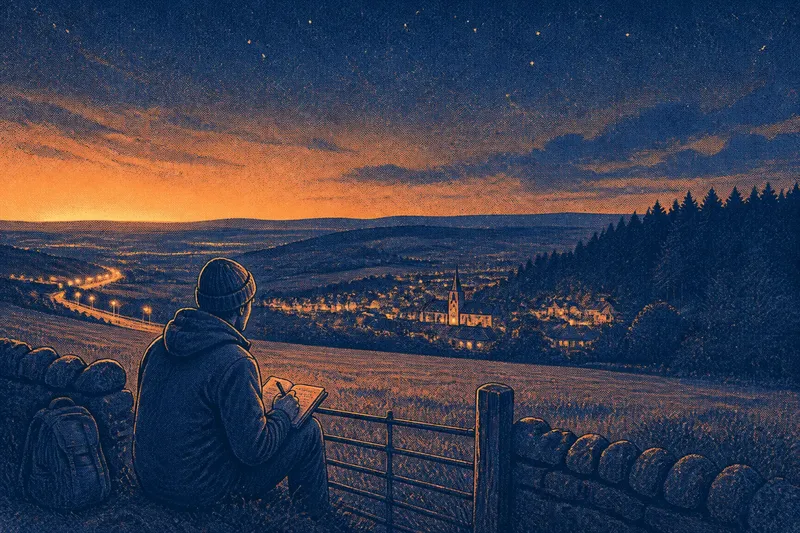
Dark-sky visibility across a county can change between a village edge and a nearby ridge. A clear view above one field says little about the lights screened by a hill elsewhere, or the cloud gathering over a distant town.
Views have boundaries
Every night view belongs to a particular place, direction and moment. A ridge may face an unlit upland on one side and a bright settlement on the other. From the ground, a line of trees or a hill crest can hide one horizon while leaving another open.
So describe what is visible rather than calling an entire county dark or bright. Name the place, the direction you face and the horizon in view. A location pin alone cannot convey what blocks the sky.
Terrain screens light
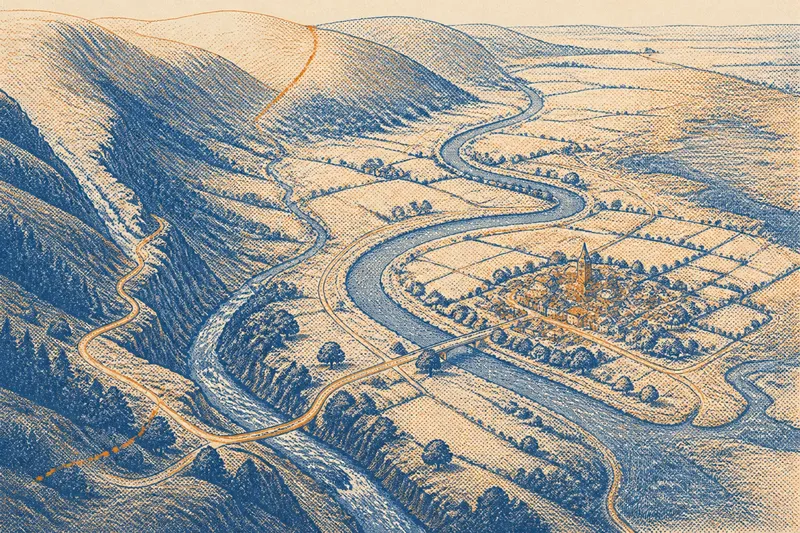
Ridges, valleys and open ground affect sightlines. A hill may screen direct lights from a settlement on its far side; an open valley may leave distant lights visible. The result depends on the direction of the land and where the lights sit, not simply on whether the observer is high or low.
Say you are at an imagined ridge with a village behind it, then turn towards open upland. The crest may hide the village’s direct lights in that direction, while the open horizon remains visible. From an imagined low field facing the village, those lights may be in view instead. The difference to report is what each horizon shows, not a verdict on the county.
Settlements make varied skies
Streetlights, illuminated buildings and roads are not spread evenly. A compact town, scattered farms and sparsely settled land produce different local surroundings. A county boundary does not stop light: a settlement just outside it may still brighten a nearby horizon.
Be cautious about naming a source if you cannot identify it. “A cluster of lights to the west” is more precise than “the town is bright” when the source is uncertain.
Weather changes the view
Cloud and haze can alter what is visible. Low cloud may hide stars; cloud above a lit settlement can reflect light and brighten part of the sky. Haze may soften distant features, while clear air can reveal more stars without removing lights from the horizon.
Record the condition and direction: for example, “haze over the eastern horizon”. That is more useful than describing the whole county as hazy after viewing one location.
Questions about one view?
Can a hilltop represent the county?
No. It describes the sky and horizons visible from that hilltop at that time. Different terrain, weather and nearby lights can produce a different view elsewhere.
Can stars show above a bright town?
Yes. Stars may remain visible overhead even when a town brightens part of the horizon. The two observations describe different parts of the sky.
What should a night-sky description include?
Name the place, viewing direction, visible horizon and weather. Mention obvious lights, but leave their source uncertain if you cannot identify it.
Describe what you see
Use each note to keep an observation within its proper limits. Check the visible sky and decide what the wording can fairly claim:
- Check the location: if it is known, name the place; if it is uncertain, describe the general setting instead.
- Check the direction faced: if it is clear, name that direction; if not, avoid claiming which side of the county the view represents.
- Check the horizon: if it is open, say so; if trees, buildings or higher ground block it, name the obstruction.
- Check visible lights: if their source is clear, identify it cautiously; if not, describe their direction and appearance without guessing.
- Check cloud and haze: if either affects part of the sky, state where; if neither is apparent, say the view appeared clear from that spot.
- Check stars overhead against the horizon: if they differ, describe each separately; if the whole view is obscured, do not infer how many stars would otherwise be visible.
Imagine a fictional observer at a village-edge field on a clear evening. They face west, see an open horizon with a glow, and cannot tell whether it comes from the village or a road; to the east, a tree line blocks the view, while stars are visible overhead. They note those observations separately, leave the glow’s source unnamed and make no claim about the hidden eastern sky. The resulting description is specific without pretending to represent the whole county.
Dark-sky visibility across a county is best described as a set of local views, each tied to its direction and conditions. When sharing a striking night sky, name the horizon it shows—and leave the unseen parts of the county open to their own descriptions.